
The intro for the best start to financial guidance
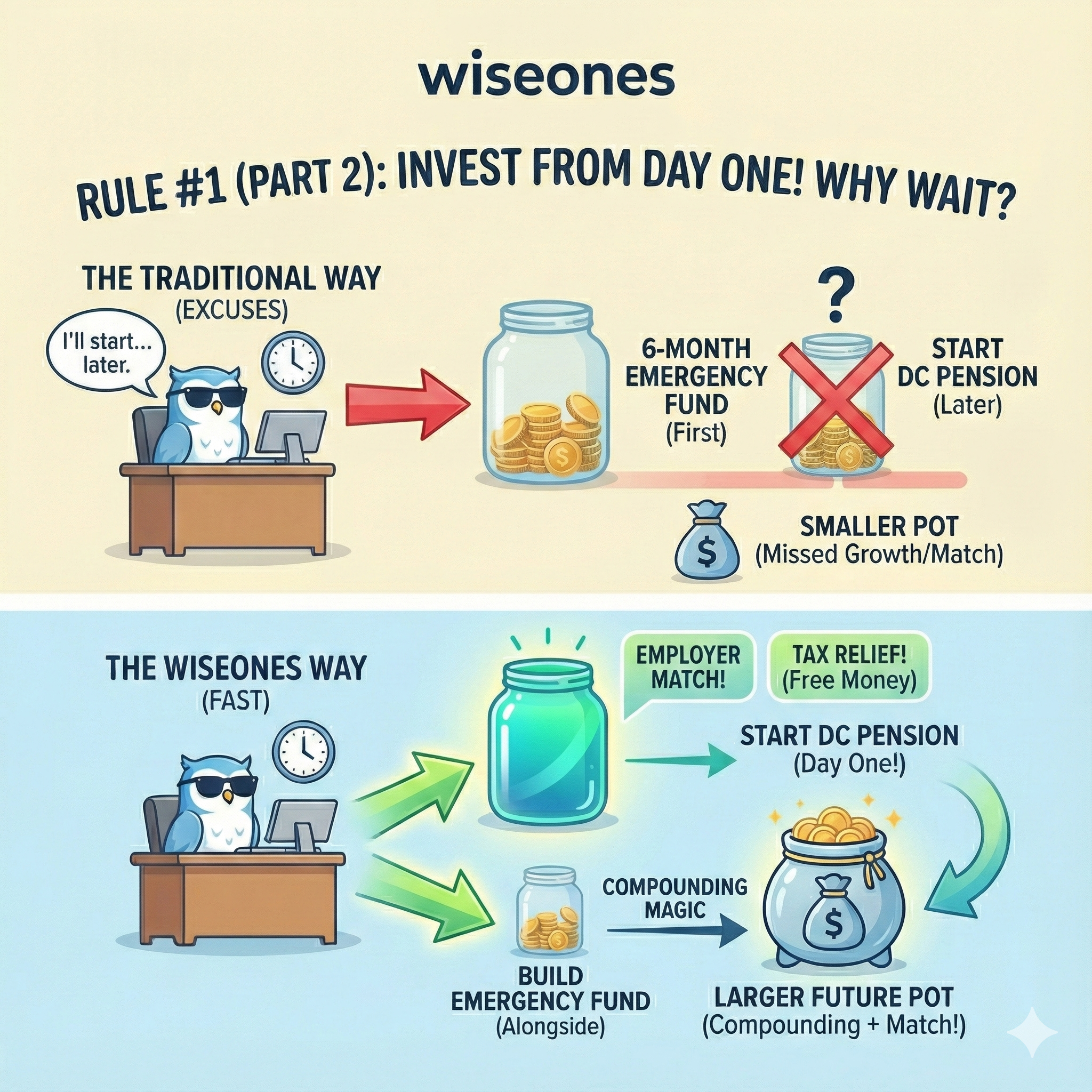
From the moment you start working, you should start investing. Not “one day”. Not “after I’ve built a 6 month emergency fund”. From day one.
The idea that investing must wait until everything else in life is perfectly in place is one of the most damaging myths in personal finance. In reality, if you earn money, you need to invest money. And the chances are, you already do. There should never be a reason to opt out of your workplace pension as a start to investing.
You’re Probably Already an Investor
If you work in the UK, you are likely enrolled into a workplace pension scheme. This isn’t just a box-ticking exercise by your employer, it’s your first and most powerful gateway into investing.
Under auto-enrolment rules:
You contribute a minimum of 5% of your salary
Your employer must contribute at least 3%
Your contribution is taken before income tax, and often before National Insurance if salary sacrifice is used
That employer contribution is extra money you would never receive if you opted out. Turning down a workplace pension is quite literally turning down part of your pay.
The Gateway to Long-Term Wealth
A Defined Contribution workplace pension is not just a savings account, it is an investment vehicle. Every month:
Money flows in
That money is invested
Over time, it grows
The longer it stays invested, the more powerful it becomes.
This is where compounding does the heavy lifting. As famously said by Albert Einstein, compounding is ‘the eighth wonder of the world. He who understands it, earns it. He who doesn’t, pays it.’ (I wasn’t there when he said it, so maybe a bit of artistic licence, but the message is clear)
Small, regular contributions over a long working life can build into a meaningful retirement income. Miss the early years, and you lose the most valuable part of the compounding journey. Time.
“I’ll Invest After I’ve Built an Emergency Fund” – This Is Wrong
Emergency funds are important. But they are not a reason to delay investing altogether.
Your workplace pension:
Comes with free money from your employer
Is tax-efficient from day one
Is designed specifically for long-term growth
You don’t need to choose between an emergency fund or investing. You build resilience and wealth at the same time, but you never give up free employer contributions.
Step One of Any Working Life
The very first financial step in any working life should be simple:
Make sure you are set up with your workplace pension.
If your employer has a deferral period, you can usually opt in
If you are below the minimum age, you can still opt in
If you’ve opted out in the past, you can rejoin
This pension should form the foundation of your entire investment strategy. Everything else ISAs, additional pensions, other investments should be built around it, not instead of it.
Key Facts About Workplace Pensions
There are still many misunderstandings about how pensions work. Here are some important facts:
The minimum pension access age is not the State Pension age it is 55, rising to 57 in 2028
You can take 25% of your pension tax-free once you reach this age
If you change employers, you can transfer your pension or move it into your own personal pension
Workplace pensions are designed to pay for retirement, not short-term spending
In most schemes, you can choose or change your investments
Your employer must contribute at least 3% of your salary; you lose this if you opt out
Contributions are made before tax, and often before National Insurance through salary sacrifice or salary exchange
Investing Isn’t Optional – It’s Automatic
The biggest mistake people make is thinking investing is something they’ll get round to later. In truth, your working life already assumes you are investing; through your pension.
The real decision isn’t whether to invest.
It’s whether you fully understand and make the most of what’s already in place.
At Wiseones Finance, we believe investing starts with understanding your workplace pension and making sure it works as hard for you as you do for your employer. This view is shared by the regulator, the Financial Conduct Authority (FCA), which is clear that workplace pensions should be considered first when looking at financial advice, before looking at any further investment solutions.